Maple syrup begins as a clear, lightly sweet sap inside maple trees. Turning that sap into the amber syrup sold in Europe is fundamentally a concentration process: producers collect sap during the seasonal flow, remove much of its water, finish it to the required syrup concentration, filter it, assess its quality and package it for sale. The basic idea has remained recognisable for generations, but modern maple production can look very different from the familiar image of a metal bucket hanging from a tree. Buckets still exist. So do gravity tubing systems, vacuum-assisted collection, reverse osmosis and highly efficient evaporators. The important point is not to treat one production style as the definition of “real” maple syrup. [4][6][7] This guide explains the process as consumers need to understand it: from freeze-thaw conditions in the tree to finished syrup, while separating universal principles from technologies that individual producers may or may not use.
1. The season begins with freeze-thaw conditions
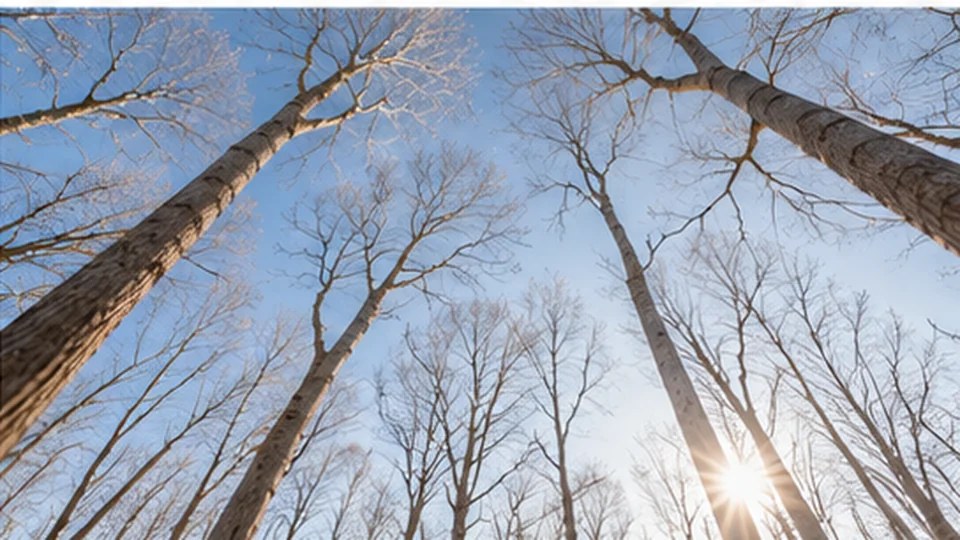
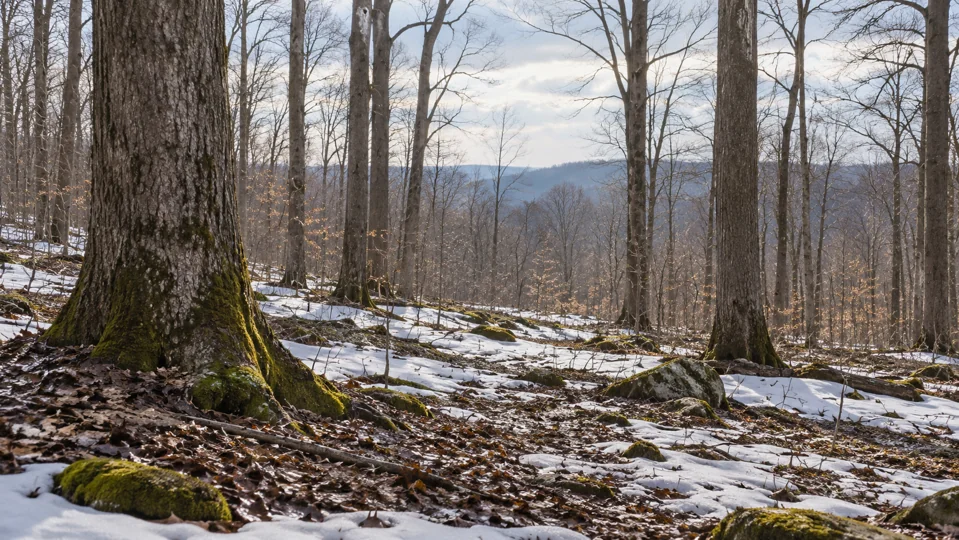
Maple sap harvest depends on an unusual piece of tree physiology. Research on sugar maple and red maple shows that repeated freezing and thawing can generate positive pressure in the xylem - the water-conducting tissue of the tree. That pressure is central to the seasonal exudation of sap that makes commercial maple production possible. [2] The mechanism is more complicated than the common shorthand that “warm days make the sap rise”. Temperature cycles, phase changes in water and ice, gases in wood tissue, dissolved sugars and the structure of maple xylem all contribute to the process described in the scientific literature. For a consumer guide, the safe summary is simple: suitable freeze-thaw patterns help create the pressure conditions under which maple sap can be collected. [2] Sugar maple and red maple are prominent examples, but they are not the only Acer species capable of producing sap. MapleSyrup.eu therefore avoids defining maple syrup as a product of only one tree species.
2. Producers tap the tree and collect the sap
During the sugaring season, a tap hole is made in a suitable maple tree and fitted with a spout. The opening provides a controlled outlet for sap when pressure conditions allow it to flow. For MapleSyrup.eu V1, that is where the tapping detail stops. Professional tapping decisions - including tree diameter, tap size, number of taps, sanitation and long-term tree-health management - deserve technical guidance of their own. They should not be compressed into a few universal numbers on a consumer page. Once sap leaves the tree, the producer has to collect it while protecting its quality. Traditional collection can use covered buckets or other food-grade containers. Larger or more modern operations commonly use networks of food-grade tubing that carry sap toward a central collection or storage point. [4][6]
3. Buckets, tubing and vacuum are different collection systems
The bucket is the most visually familiar maple-syrup image, but it is only one collection method. Tubing systems link tapped trees through smaller lateral lines and larger mainlines, reducing the need to empty individual containers and allowing sap to move toward a central location. [4][7] Tubing can work with gravity alone. Producers can also add vacuum. University extension guidance describes vacuum pumps as a way to increase sap yield from tubing systems. The important distinction is that vacuum assists collection; it does not create maple syrup and it is not a compulsory feature of a maple operation. [4][6] This is one reason MapleSyrup.eu will not use a false visual contrast such as “traditional Canada” versus “modern Vermont”, or vice versa. Similar technologies are available across the North American industry, and individual operations differ.
4. The sap may be pre-concentrated with reverse osmosis
Fresh maple sap contains far more water than finished syrup, so water removal is the central processing task. Some producers send sap through reverse-osmosis equipment before it reaches the evaporator. Reverse osmosis uses a membrane process to remove water from the sap while retaining a more concentrated sugar solution. The National Research Council of Canada notes that maple producers can remove up to about 80% of the water from sap before making syrup, reducing the energy needed for subsequent concentration. [3] But reverse osmosis is an optional efficiency technology, not a definition of modern maple syrup. A producer can make genuine syrup without it. Nor does one energy-saving processing step justify a blanket environmental claim about the whole product.
5. Heat removes more water in the evaporator
Whether or not sap has first passed through reverse osmosis, thermal evaporation is a central part of concentrating it into syrup. In a sugarhouse, sap is heated in an evaporator so that water is driven off and the remaining liquid becomes progressively more concentrated. [7] Evaporators vary greatly in size, design and fuel source. MapleSyrup.eu does not treat a particular pan, fuel or sugarhouse style as the authentic method. The common function is what matters here: controlled water removal and concentration. Heating also forms part of the transformation from a pale sap to the flavourful product recognised as maple syrup. A future technical or food-science article could explore flavour chemistry in more detail; this V1 production guide does not use boiling time as a simplistic explanation for grade or colour.
6. The syrup is finished to the required concentration
Finished maple syrup has to reach the appropriate concentration. As one authoritative reference point, the Canadian Grade Compendium requires Canada Grade A maple syrup to contain at least 66.0% and no more than 68.9% soluble solids, measured under the specified conditions. [1] That figure is a Canadian grading requirement, not a universal EU legal definition. It nevertheless illustrates why production cannot be reduced to “boil it for a certain number of minutes”: producers are aiming for a measurable finished concentration, and starting sap conditions vary. This is also why MapleSyrup.eu does not publish a universal sap-to-syrup conversion such as “exactly 40 litres make one litre”. The amount of sap required depends in part on how much dissolved sugar the starting sap contains and the concentration required in the finished syrup. A single memorable ratio can be useful as an illustration, but the current V1 evidence base does not justify presenting one number as a universal rule. [8]
7. Filtration and quality control come before the retail bottle
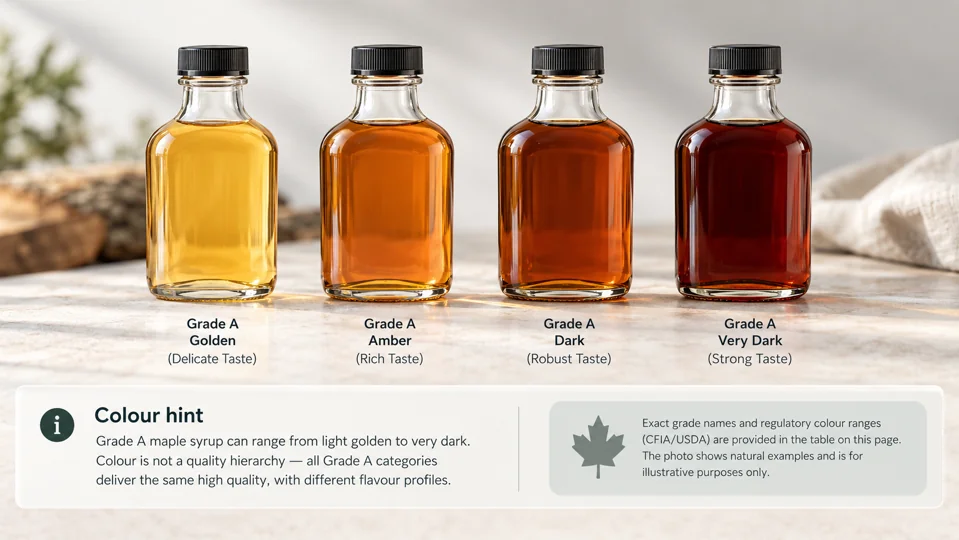
Producing syrup is not finished the moment the target concentration is reached. Quality-control guidance from the University of Maine treats filtering, grading and attention to cleanliness as parts of producing a high-quality retail product. [5] Filtering helps remove suspended material from finished syrup. The precise equipment and sequence can vary by operation, so this page does not prescribe one filter technology. The same principle applies to handling sap: extension sources warn that warm sap can deteriorate, which is why prompt and careful handling matters during the short production season. [5][6] Where a formal grading system applies, finished syrup is then assessed against the relevant requirements. Canada and the United States both use Grade A colour and flavour classes such as Golden/Delicate, Amber/Rich, Dark/Robust and Very Dark/Strong. The dedicated Grades, Colour & Taste guide explains those standards rather than duplicating them here.
8. Finally, the syrup is packaged for sale
After processing and quality control, syrup is filled into retail or bulk containers. Packaging can include glass, plastic or metal formats, and products may later move through importers, bottlers or distributors before reaching a European shopper. This production guide deliberately stops before detailed storage, shelf-life and food-business canning instructions. Those questions need their own food-safety evidence and should not be inferred from a general description of maple manufacture. For consumers, the key distinction is simpler: the manufacturing process should lead to a product that meets the applicable identity, quality and labelling requirements. Packaging style itself is not proof of origin, purity or quality.
Traditional and modern methods are not a quality ranking
It is tempting to tell maple syrup as a story of “old-fashioned buckets versus industrial technology”. That framing is too crude. Bucket collection can be practical at one scale; tubing can be practical at another. Vacuum can improve collection efficiency. Reverse osmosis can reduce how much water must later be evaporated. None of those facts establishes that one method automatically tastes better, is more authentic or produces a higher grade. The same caution applies geographically. Québec, Vermont and other maple-producing regions use a mixture of traditional knowledge and modern equipment. Production technology should be described as technology, not as a proxy for national character.
The process at a glance
For a factual infographic, MapleSyrup.eu can summarise the process as: maple tree → tapping → sap collection → optional reverse osmosis → evaporation/concentration → finishing → filtration/quality control → grading → bottling. Two qualifications should stay visible. First, reverse osmosis and vacuum are optional technologies rather than mandatory steps. Second, the diagram is a production overview, not a technical operating manual. That distinction is central to this page: maple syrup is straightforward to understand at consumer level, but professional production involves enough biological, engineering and food-quality detail that simple folklore rules should not be mistaken for universal standards.
Process dataset
| Step | Stage | Verified core | Caveat |
|---|---|---|---|
| 1 | Sap season / tree physiology | Maple trees such as sugar and red maple can generate positive xylem pressure during repeated freeze-thaw cycles. | Not every warm day automatically produces sap; physiology is more complex than the slogan “warm days make sap rise”. |
| 2 | Tapping | A small tap hole and spout provide an outlet for sap during the season. | V1 explains the concept, not prescriptive drill sizes, tree diameters or tap-count rules. |
| 3 | Sap collection | Sap can be collected in buckets or through food-grade tubing to a central collection point. | Methods vary by scale, terrain and operation. |
| 4 | Vacuum (optional) | Vacuum can be paired with tubing to increase sap yield/flow from the collection system. | Optional modern collection method; do not portray as universal. |
| 5 | Reverse osmosis (optional) | RO can remove a substantial share of water from sap before thermal evaporation. | Optional; it concentrates sap, it does not by itself make finished syrup. |
| 6 | Evaporation / concentration | Heat removes more water and concentrates dissolved sugars and flavour-forming components. | Equipment and fuel systems vary. |
| 7 | Finishing | Syrup is brought to the required finished concentration/density. | Canada Grade A: 66.0-68.9% soluble solids; jurisdiction-specific standard. |
| 8 | Filtration / quality control | Finished syrup is filtered and assessed for quality characteristics. | Exact filtration systems vary; V1 avoids equipment prescriptions. |
| 9 | Grading | Where grading applies, colour, flavour and other requirements are assessed under the relevant system. | Grade details live on the dedicated Grades page. |
| 10 | Bottling | Syrup is packaged for sale after processing and quality control. | V1 does not give food-business canning temperatures or shelf-life instructions. |
Sources & reading notes
Numbered references belong to this article. Dates, definitions and limitations matter.
- Canadian Food Inspection Agency
Canadian Grade Compendium: Volume 7 - Maple Syrup ↗Current checked 10 Sep 2026 · Grade names and colour classes.
- Maryam Zarrinderakht et al.
Experimental and computational comparison of freeze-thaw-induced pressure generation in red and sugar maple ↗Tree Physiology 44(4), 2024; published 11 Jan 2024 · Peer-reviewed physiology of freeze-thaw sap exudation; supports cautious mechanism explanation.
- National Research Council Canada
1946-1964 - NRC history: membrane technology / reverse osmosis ↗Current NRC page; historical technology overview · NRC states maple producers can filter up to 80% of water from sap before syrup making, saving energy costs/consumption.
- University of Maine Cooperative Extension
Bulletin #7040: Getting Geared Up for Maple Sugaring - Supplies and Equipment Needed for 50 to 500 Taps ↗Current extension guidance; accessed 10 Sep 2026 · Buckets, food-grade tubing, mainlines and vacuum as sap-collection options.
- University of Maine Cooperative Extension
Bulletin #7038: Maple Syrup Quality Control Manual ↗Updated/revised 2025 · Sap quality, tubing, processing, filtering and grading quality-control context.
- Penn State Extension
Maple Syrup Production ↗Current extension page; original publication older · Bucket and tubing collection, vacuum context, prompt handling of sap.
- Cornell Maple Program
About Maple Syrup ↗Current program page; accessed 10 Sep 2026 · Tubing/mainline collection, vacuum use among larger producers, evaporation overview.
- MapleSyrup.eu project
V1 Content Packages CP01-CP1110 Sep 2026 · Evidence ledgers, source registers, publication controls and QA implementation. Internal editorial synthesis; the underlying dossier is not publicly hosted.
Download the complete source register (CSV) ↓ · Our methodology